Description
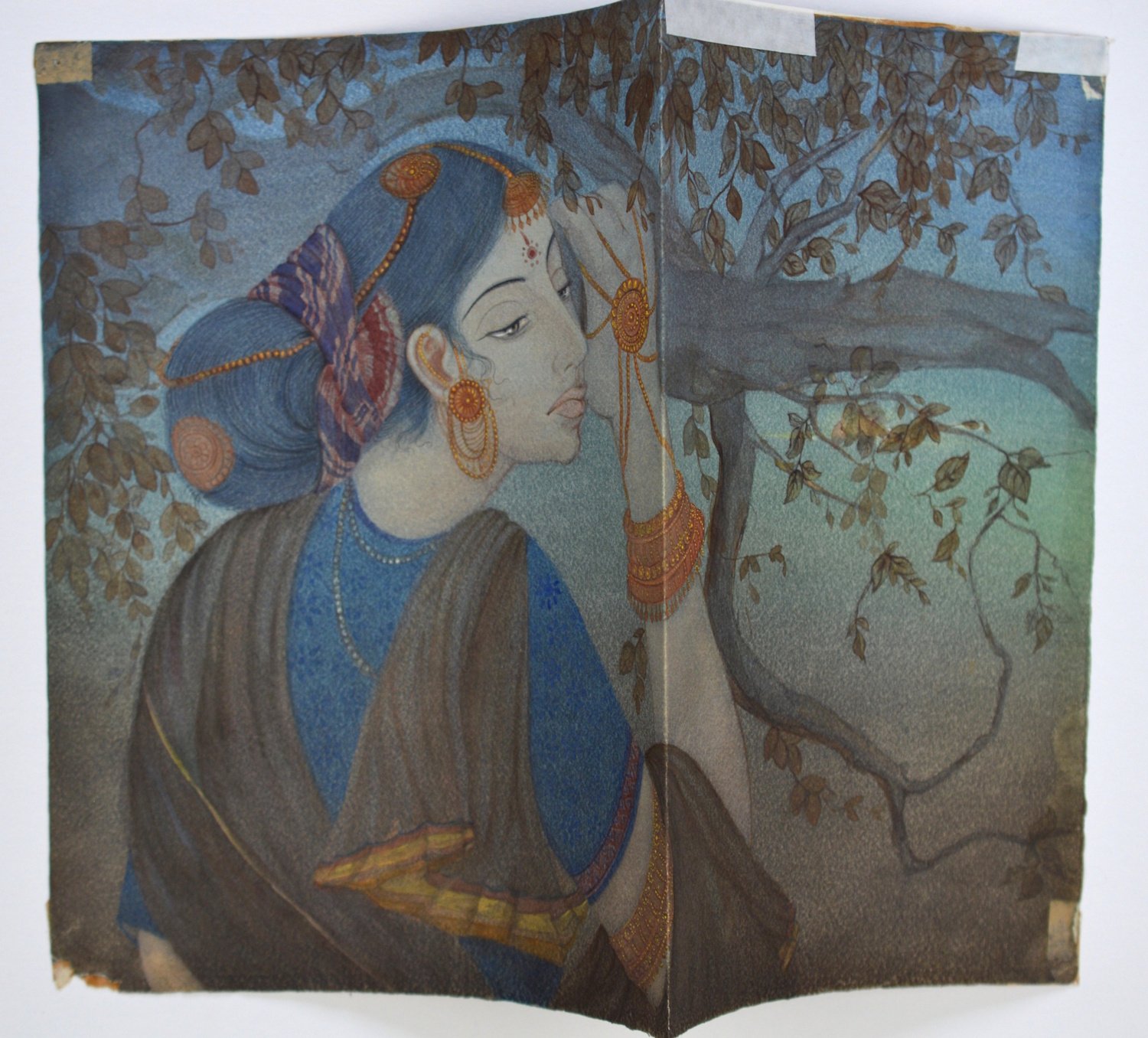
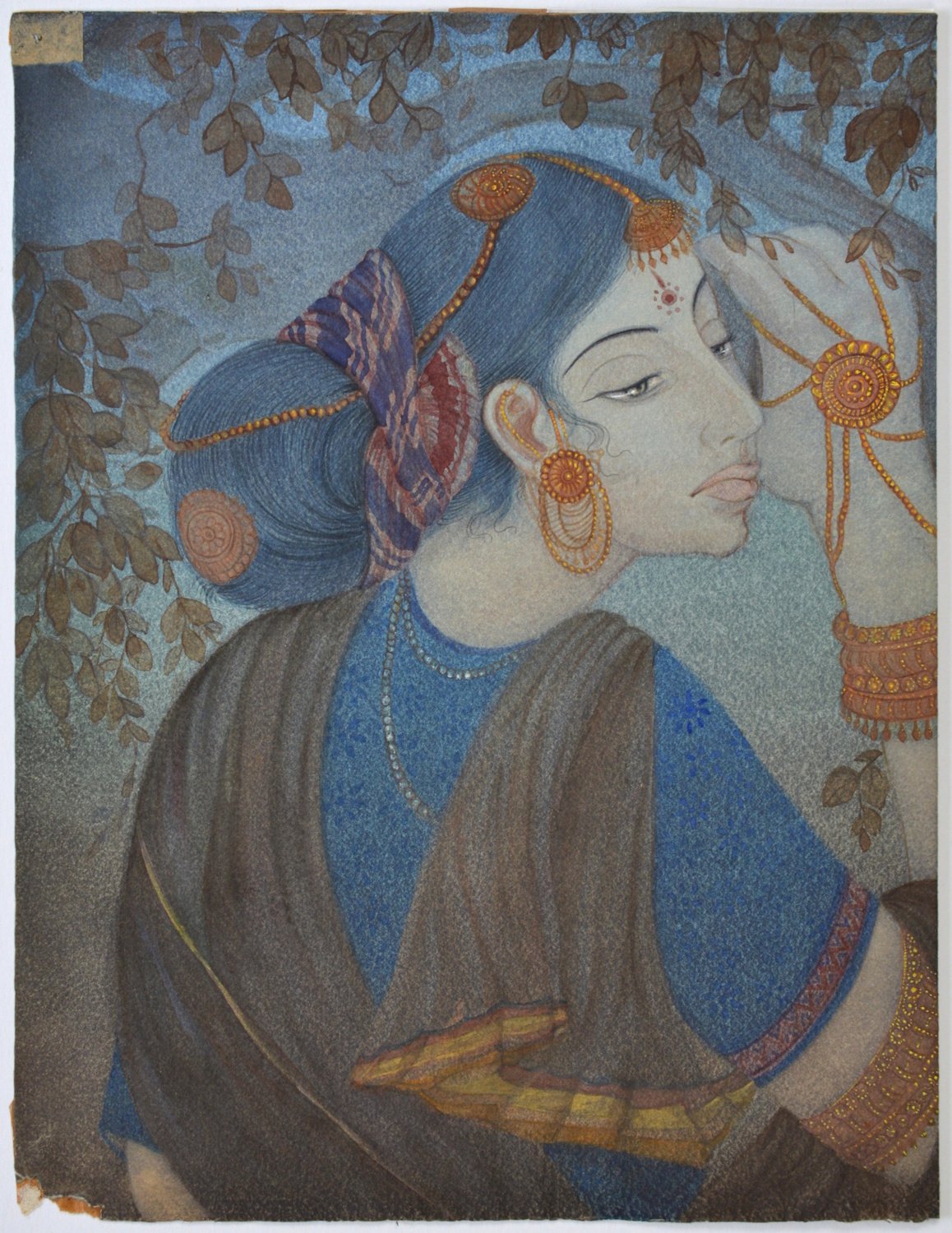
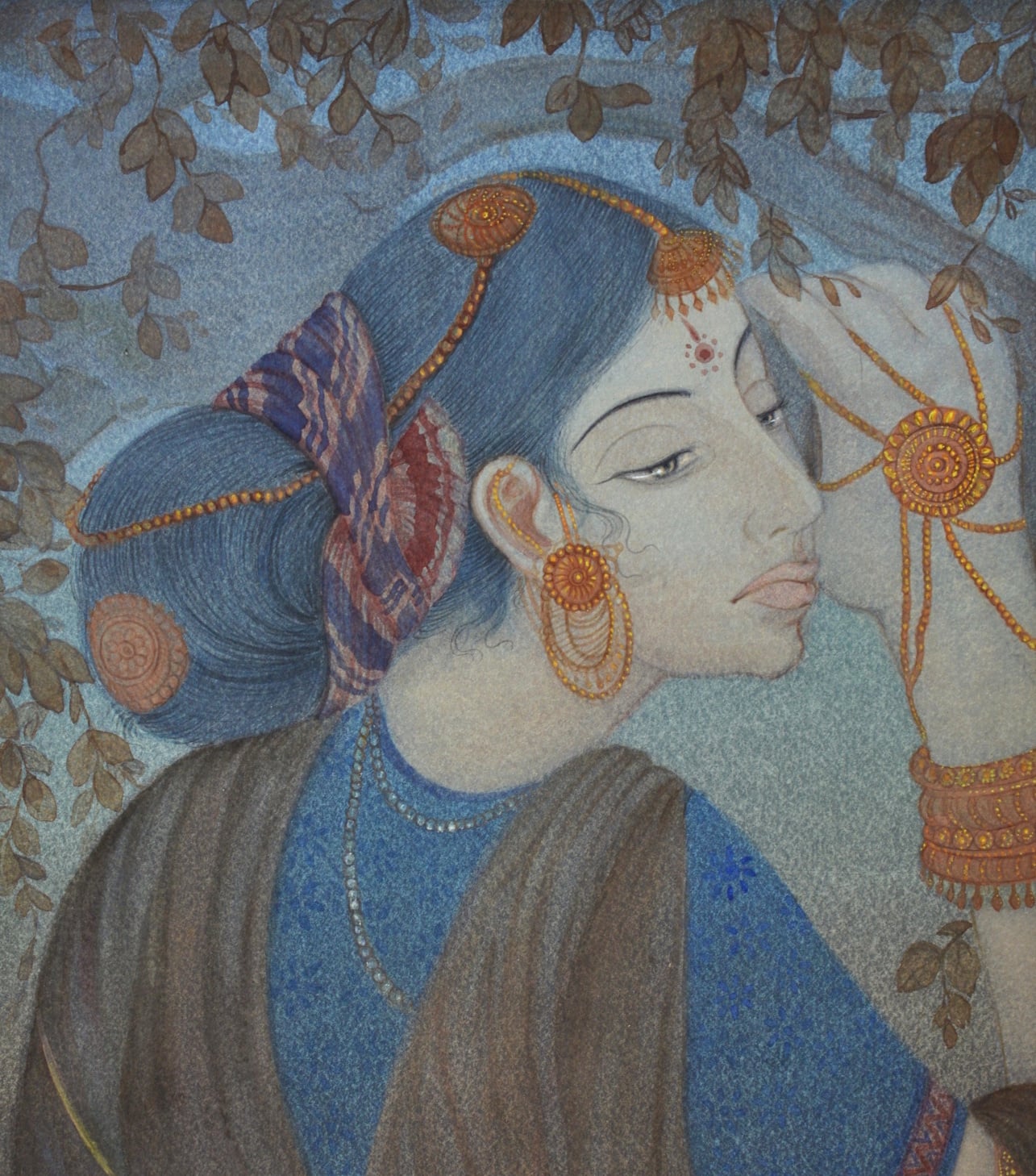
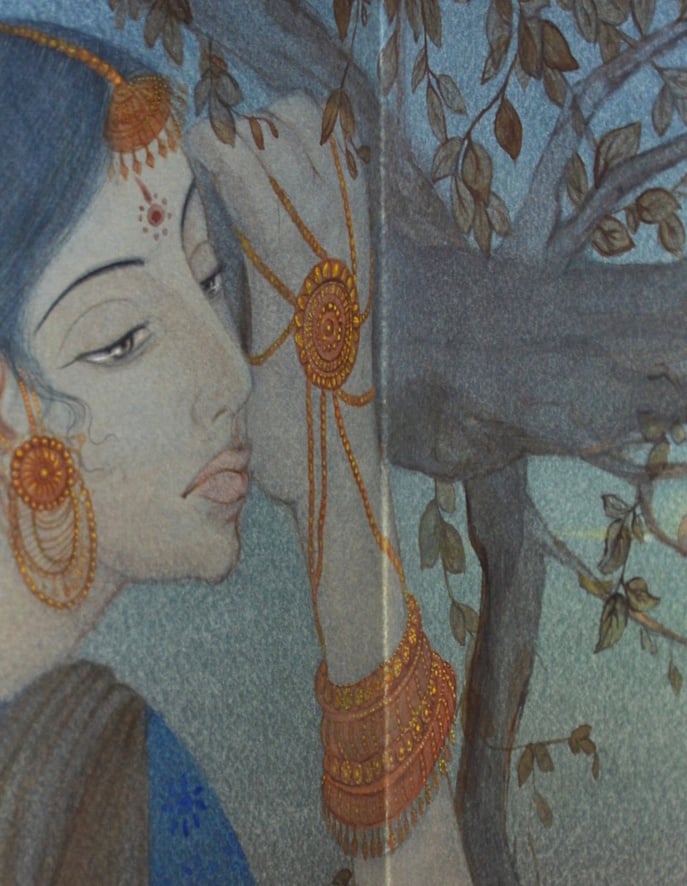
The Bengal school arose as an avant garde and nationalist movement reacting against the academic art styles previously promoted in India, both by Indian artists such as Raja Ravi Varma and in British art schools. Following the influence of Indian spiritual ideas in the West, the British art teacher Ernest Binfield Havell attempted to reform the teaching methods at the Calcutta School of Art by encouraging students to imitate Mughal miniatures. This caused controversy, leading to a strike by students and complaints from the local press, including from nationalists who considered it to be a retrogressive move. Havell was supported by the artist Abanindranath Tagore, a nephew of the poet Rabindranath Tagore. Tagore painted a number of works influenced by Mughal art, a style that he and Havell believed to be expressive of India’s distinct spiritual qualities, as opposed to the materialism of the West. Tagore’s best-known painting, Bharat Mata (Mother India), depicted a young woman, portrayed with four arms in the manner of Hindu deities, holding objects symbolic of India’s national aspirations. Tagore later attempted to develop links with Japanese artists as part of an aspiration to construct a pan-Asianist model of art. Through the paintings of Bharat Mata, Abanindranath established the pattern of patriotism. Some of the notable painters and artists of Bengal school were Nandalal Bose, M.A.R Chughtai, Sunayani Devi (sister of Abanindranath Tagore), Manishi Dey, Mukul Dey, Kalipada Ghoshal, Asit Kumar Haldar, Sudhir Khastgir, Kshitindranath Majumdar, Sughra Rababi.
The Bengal school’s influence in India declined with the spread of modernist ideas in the 1920s. As of 2012, there has been a surge in interest in the Bengal school of art among scholars and connoisseurs.