John Sinnell (also called Linnell) Bond (Architect, 1764–1837) – Chester Castle

£380.00

1 in stock

John Sinnell (also called Linnell) Bond (Architect, b. 14 Sep 1764 – d. Nov 6, 1837)

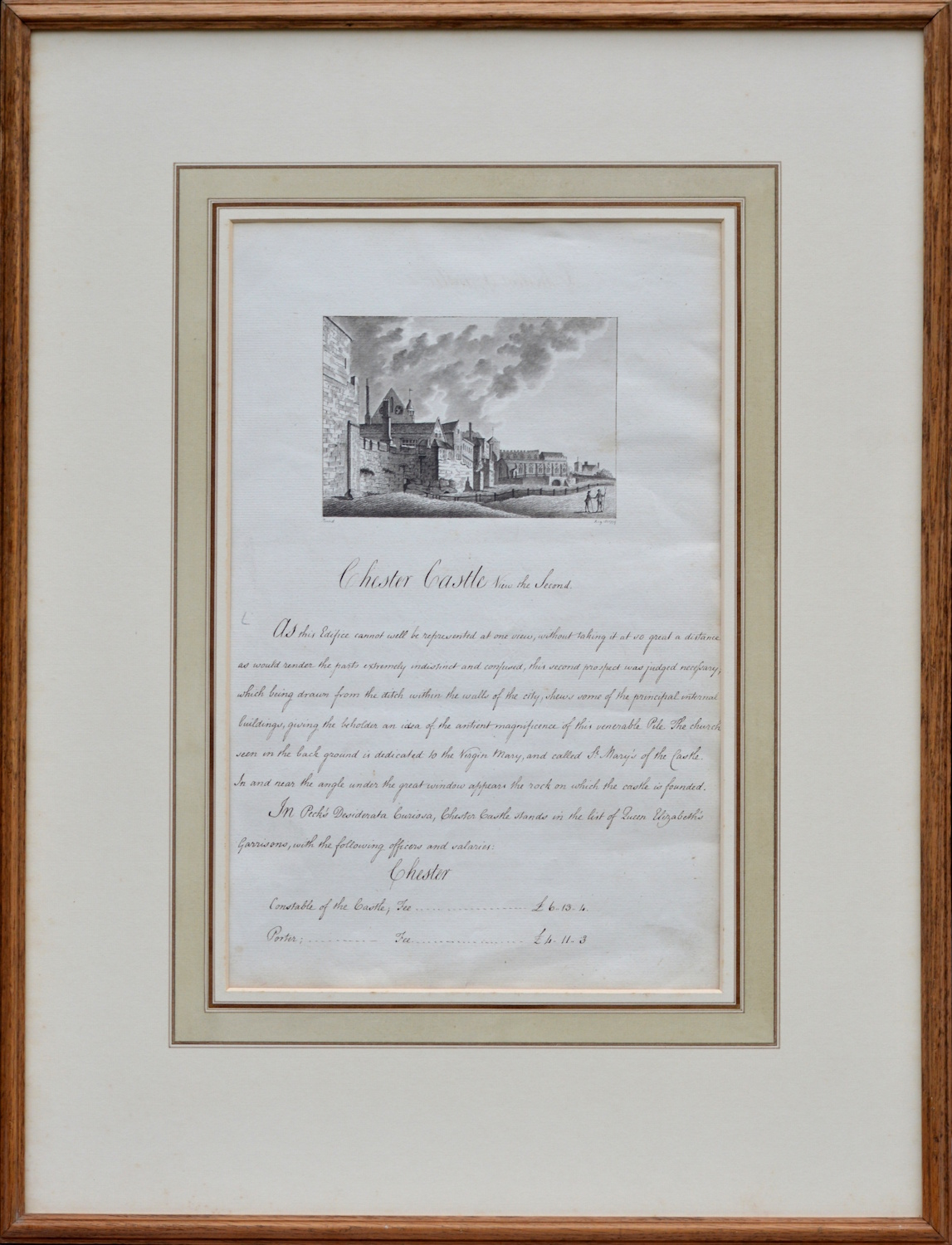
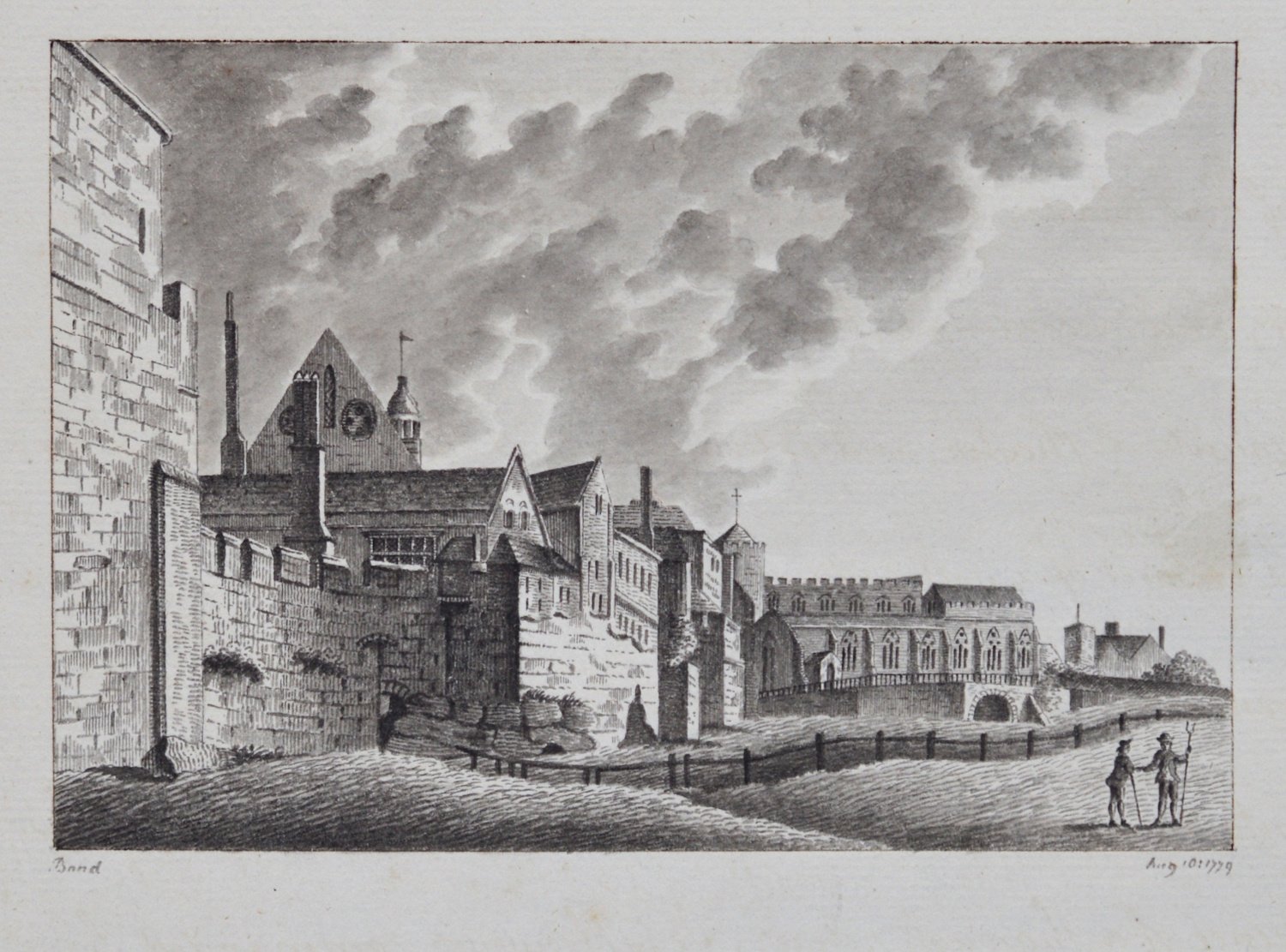
Chester Castle (Second View)

A fine 18th century bistre pen and ink / wash drawing on laid paper; watermark FLEUR-DE-LIS GR. Inscribed  below the image, left to right; JBond – Aug 10 : 1779. Handwritten text on the front and back of the sheet describes the view, along with some other historic details. Framed and glazed.

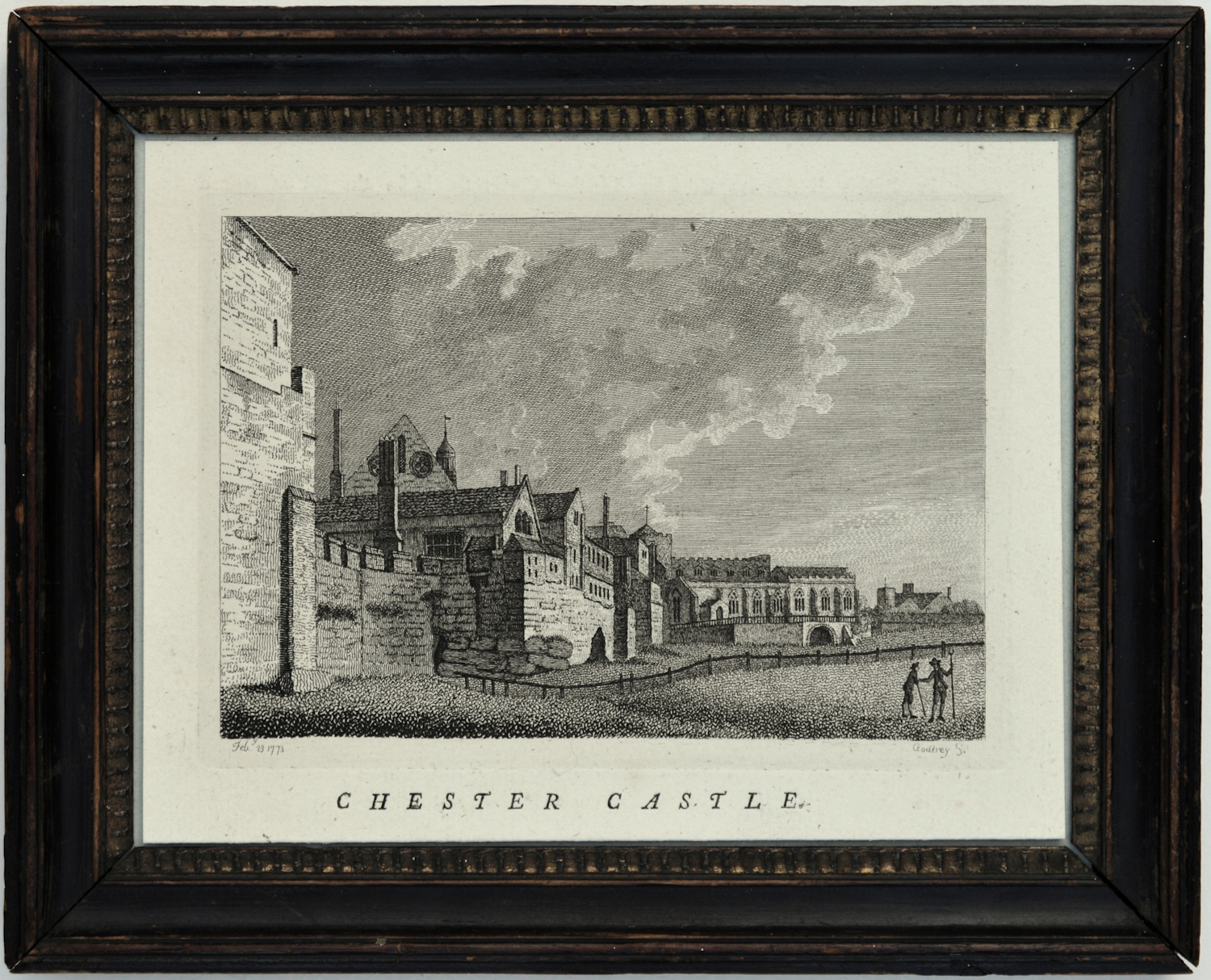
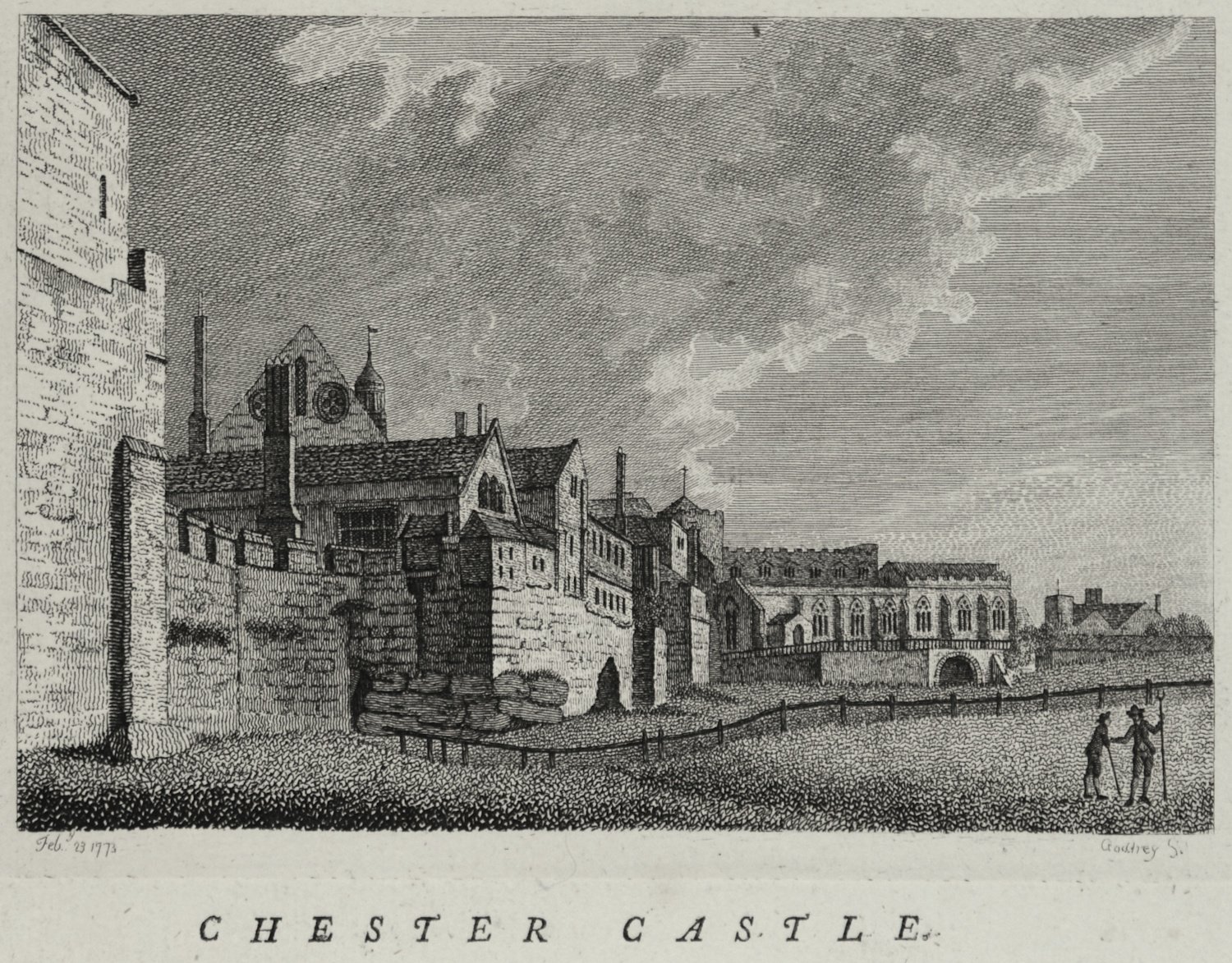
Included in the sale is an 18th century copperplate engraving of the subject, dated 1773, engraved by R. Godfrey Sc. The engraving has been folded to just show the image of the castle, however, the following text is present on both the drawing and the print. Published : “The Antiquities of England and Wales”, by Francis Grose, Feb 3, 1773, for S. Hooper. Chester Castle, Plate II, page 137. Framed and glazed.

Drawing Sheet: 16 5/8 x 10 5/8 in. (42.3 x 27.1 cm.)
Frame: 25 3/4 x 19 3/4 in. (65.5 x 50.2 cm.)
Print Frame: 7 5/8 x 9 3/8 in. (19.4 x 24 cm.)

Bond would have been about 15 when he completed this drawing. The original may have been made by Nathaniel Dance RA (1735 – 1811) in 1769.

Description

Bond was a shy and retiring man whose talents should have given him a more glittering career. An extremely talented draughtsman, he was educated at the Royal Academy, where he gained a gold medal in 1786. He occasionally exhibited at the academy up to 1797. After devoting some years to the study of ancient architecture in Italy and Greece he set up as an architect in London and designed several large mansions. As an architect, little of his work survives apart from the imposing neo-classical Stamford Hotel, Stamford, Lincolnshire of around 1810. Bond also prepared an architectural design for the Strand Bridge – later known as Waterloo Bridge – in collaboration with the engineer George Dodd. The project was later taken over by John Rennie.

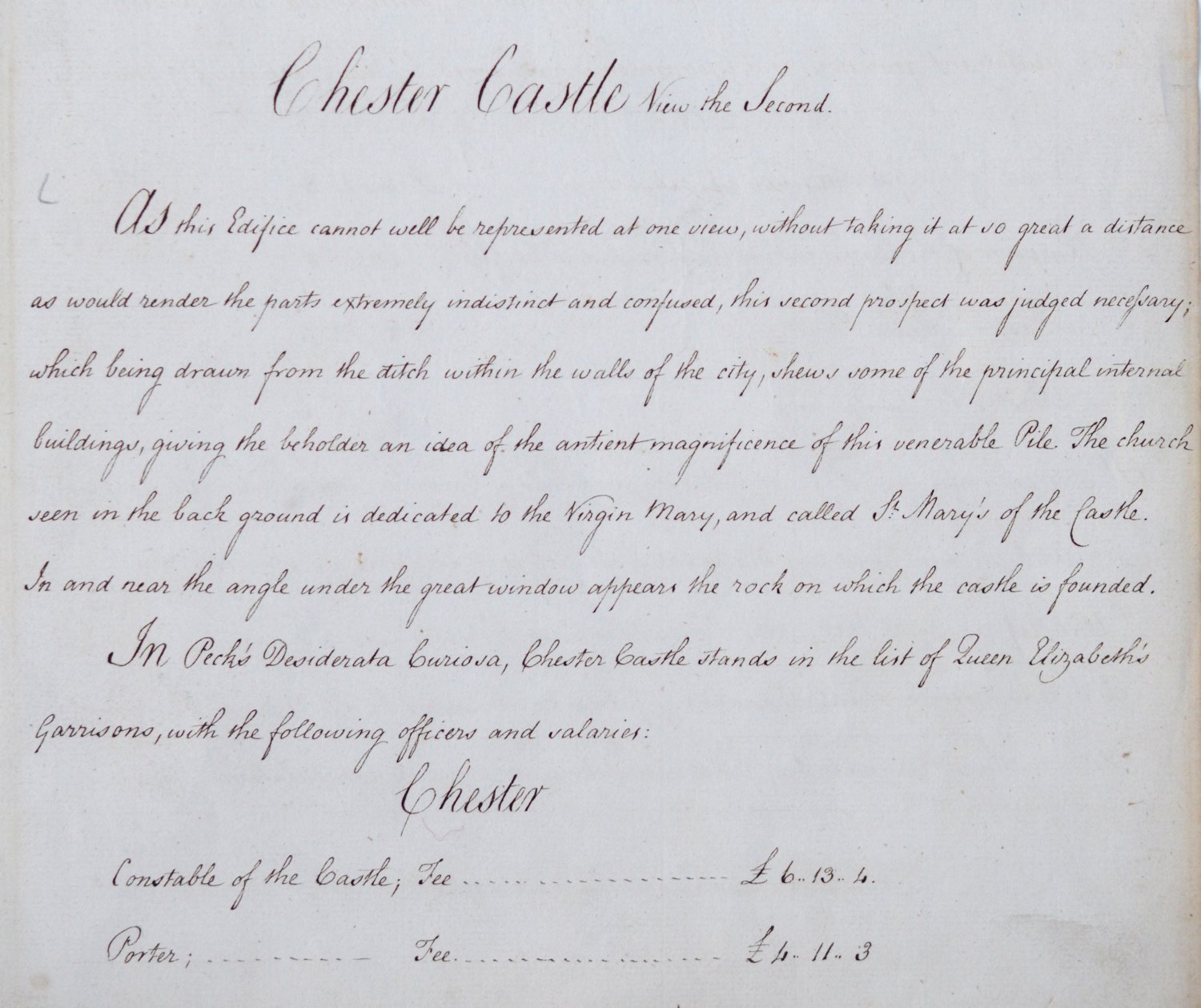
TEXT (Recto) :

As this Edifice cannot well be represented at one view, without taking it at so great a distance as would render the parts extremely indistinct: and confused, this second prospect was judged necessary ; which being drawn from the ditch within the walls of the city, shews some of the principal internal buildings, giving the beholder an idea of the antient magnificence of this venerable Pile. The church seen in the background is dedicated to the Virgin Mary and called St. Mary’s of the Castle. In and near the angle under the great window appears the rock on which the castle is founded.

In Peck’s Desiderata Curiosa, Chester Castle stands in the lift of Queen Elizabeth’s Garrisons, with the following officers and salaries :

CHESTER.

Constable of the Castle ; Fee – £ 6 .. 13 .. 4.
Porter ; Fee – £ 4 .. 11 .. 3.

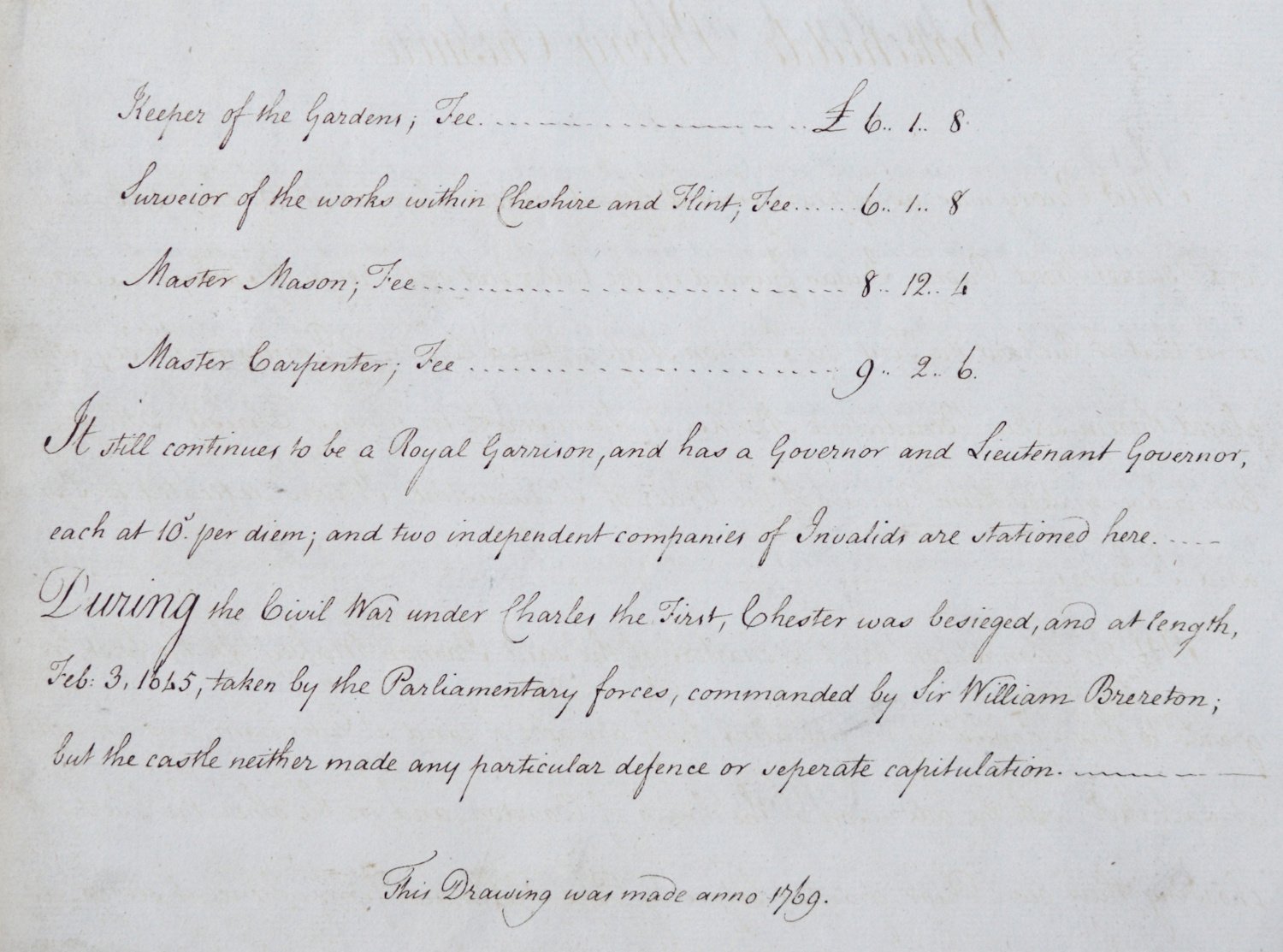
TEXT (Verso) :

CHESTER CASTLE

Keeper of the Gardens ; Fee – £ 6 .. 1 .. 8.
Surveyor of the works within Cheshire and Flint ; Fee – £ 6 .. 1 .. 8.
Master Mason ; Fee – £ 8 .. 12 .. 4.
Master Carpenter ; Fee – £ 9 .. 2 .. 6.

It still continues to be a Royal Garrison, and has a Governor and Lieutenant Governor, each at 10s. per diem ; and two independent companies of Invalids are stationed here.

During the Civil War under Charles the First, Chester was besieged, and at length, Feb. 3, 1645, taken by the Parliamentary forces, commanded by Sir William Brereton ; but the Castle neither made any particular defence or separate capitulation.

This Drawing was made anno 1769.
Brand

Bond, John Sinnell, (also called Linnell) - (Architect, b. 14 Sep 1764 – d. Nov 6, 1837)

John Sinnell Bond (1764–1837) was a shy and retiring man whose talents should have given him a more glittering career. An extremely talented draughtsman, he enjoyed exhibiting such compositions as ‘The Temple of Jupiter at Olympia, with the procession of the conquerors at the Games’. As an architect, little of his work survives apart from the imposing neo-classical Stamford Hotel, Stamford, Lincolnshire of around 1810. The Royal Institute of British Architects. Bond was educated at the Royal Academy, where he gained a gold medal in 1786. He occasionally exhibited at the academy up to 1797. After devoting some years to the study of ancient architecture in Italy and Greece he set up as an architect in London and designed several large mansions. Following a fire at Exton Hall in 1810, its owner, Sir Gerard Noel, moved into a nearby 17th century house, and commissioned Bond to make alterations. Bond also designed the Stamford Hotel, at Stamford, Lincolnshire for Noel. It is in the Greek revival style, with a giant order derived from the Choragic Monument of Lysicrates. Many other designs which he made for Noel were never carried out. Bond also prepared an architectural design for the Strand Bridge - later known as Waterloo Bridge - in collaboration with the engineer George Dodd. The project was later taken over by John Rennie. He contributed papers on architectural subjects to the Literary Gazette. He was well versed in the classics and made a translation of Vitruvius. He died in Newman Street, London. An obituary in the Gentleman's Magazine called him "one of the most peaceful and amiable of mankind". Wikipedia.