Description
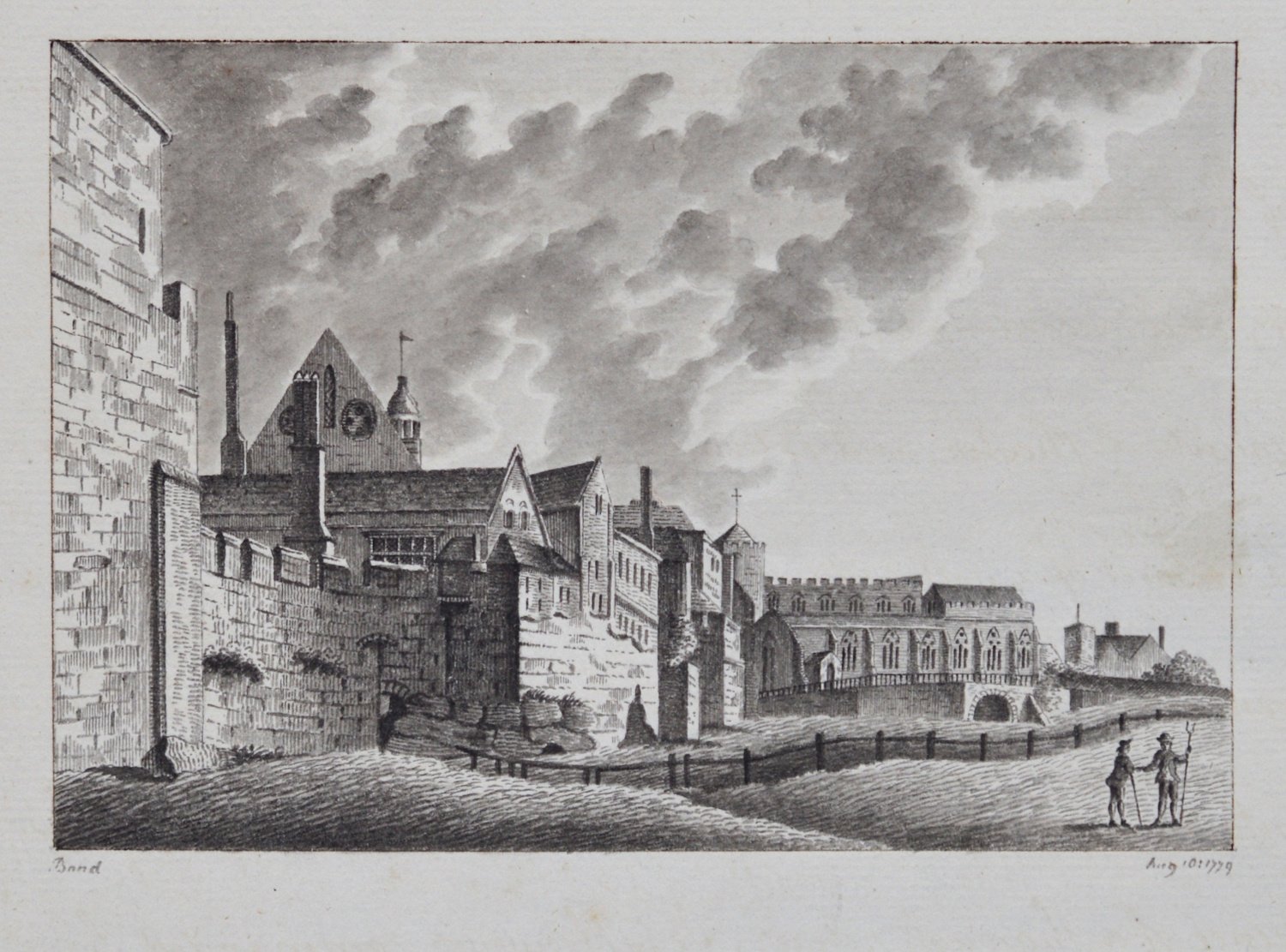
Bond was a shy and retiring man whose talents should have given him a more glittering career. An extremely talented draughtsman, he was educated at the Royal Academy, where he gained a gold medal in 1786. He occasionally exhibited at the academy up to 1797. After devoting some years to the study of ancient architecture in Italy and Greece he set up as an architect in London and designed several large mansions. As an architect, little of his work survives apart from the imposing neo-classical Stamford Hotel, Stamford, Lincolnshire of around 1810. Bond also prepared an architectural design for the Strand Bridge – later known as Waterloo Bridge – in collaboration with the engineer George Dodd. The project was later taken over by John Rennie.
TEXT (Recto) :
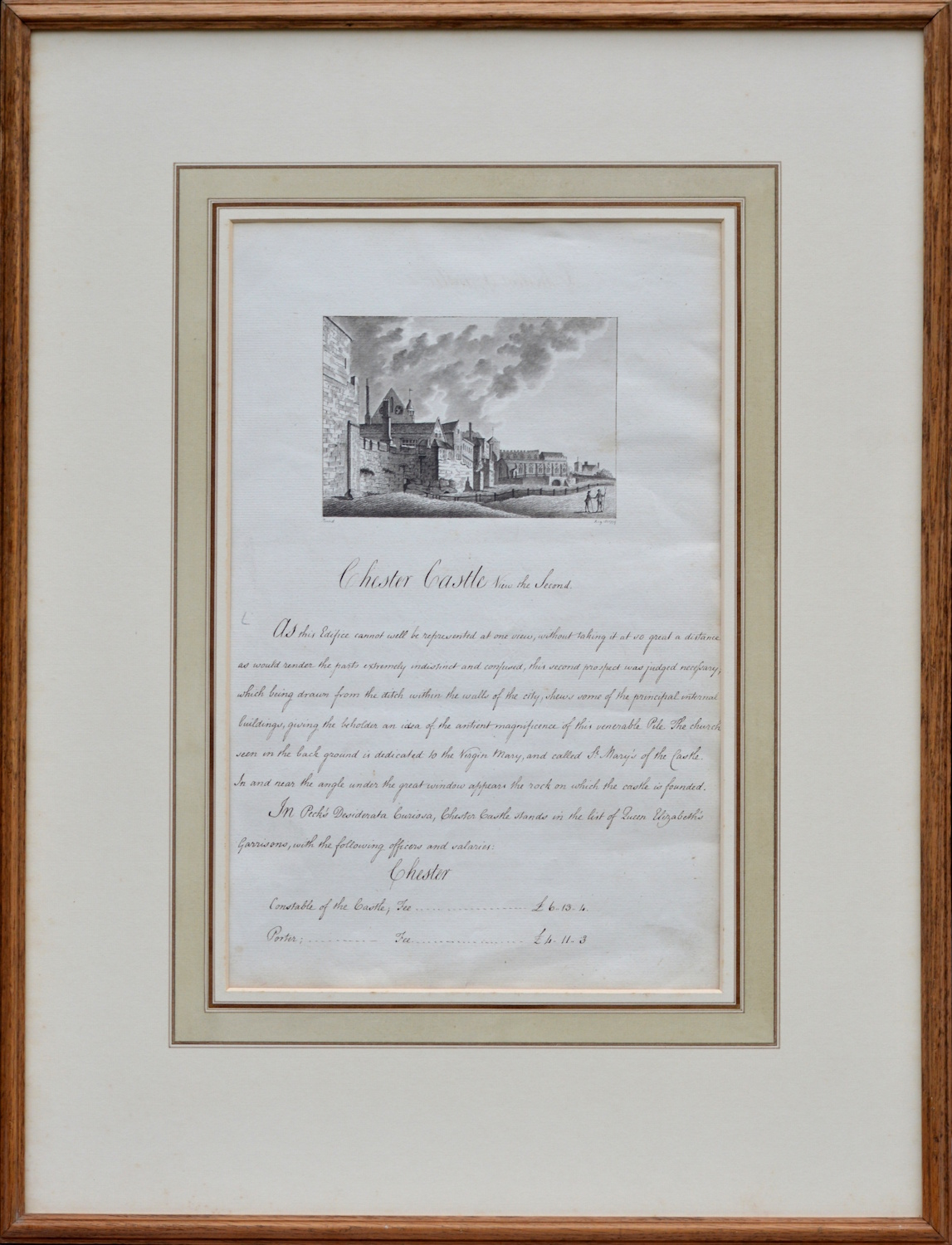
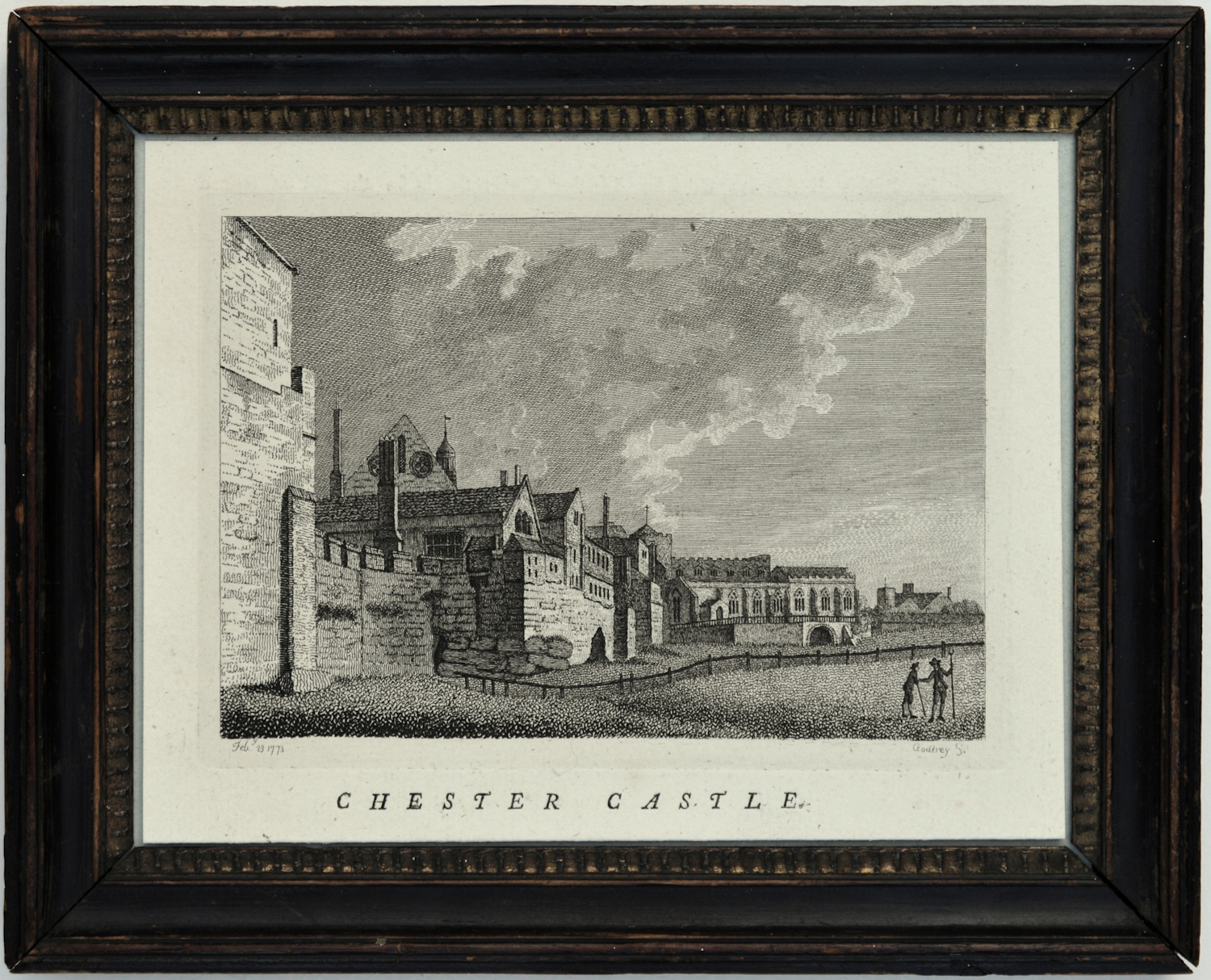
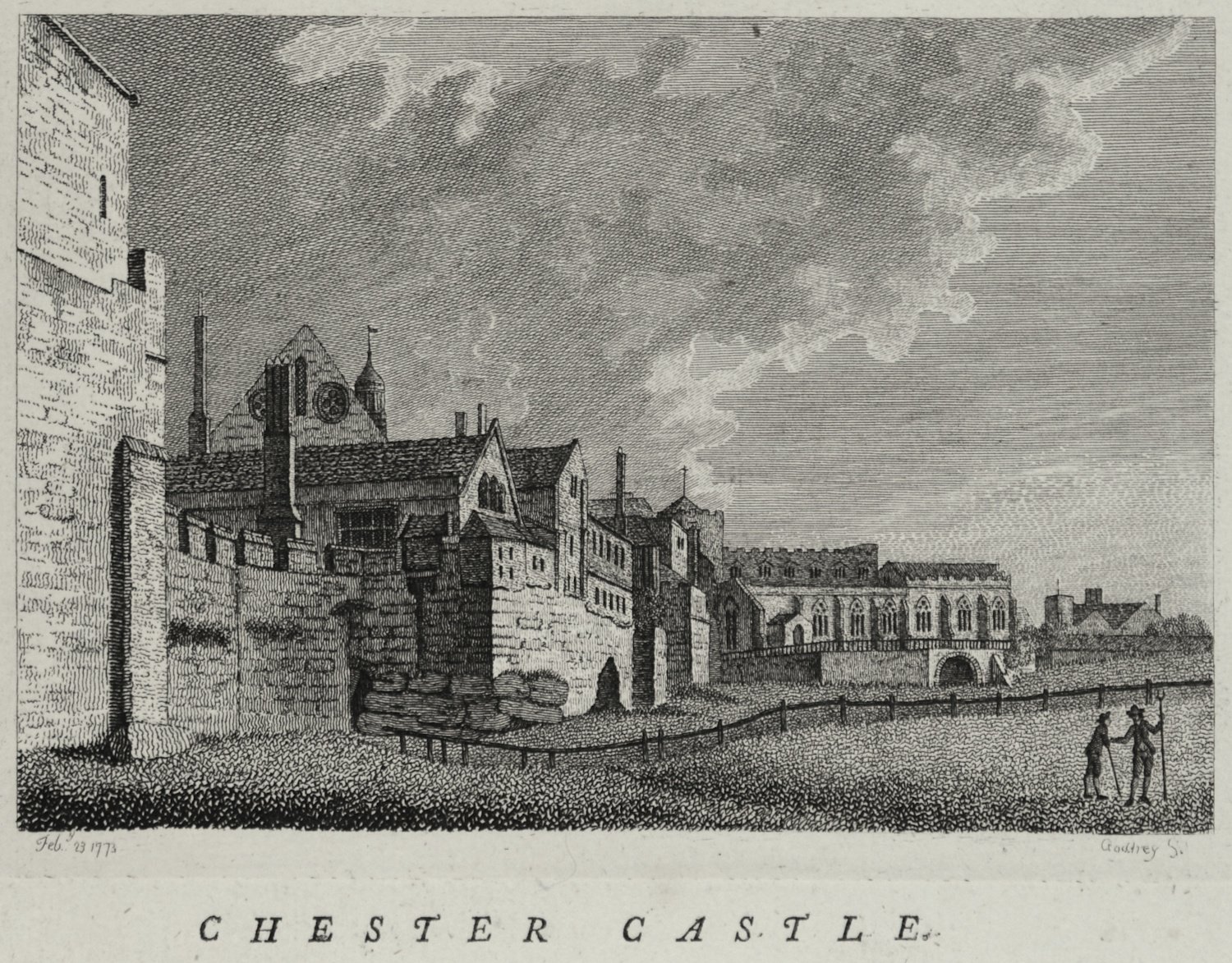
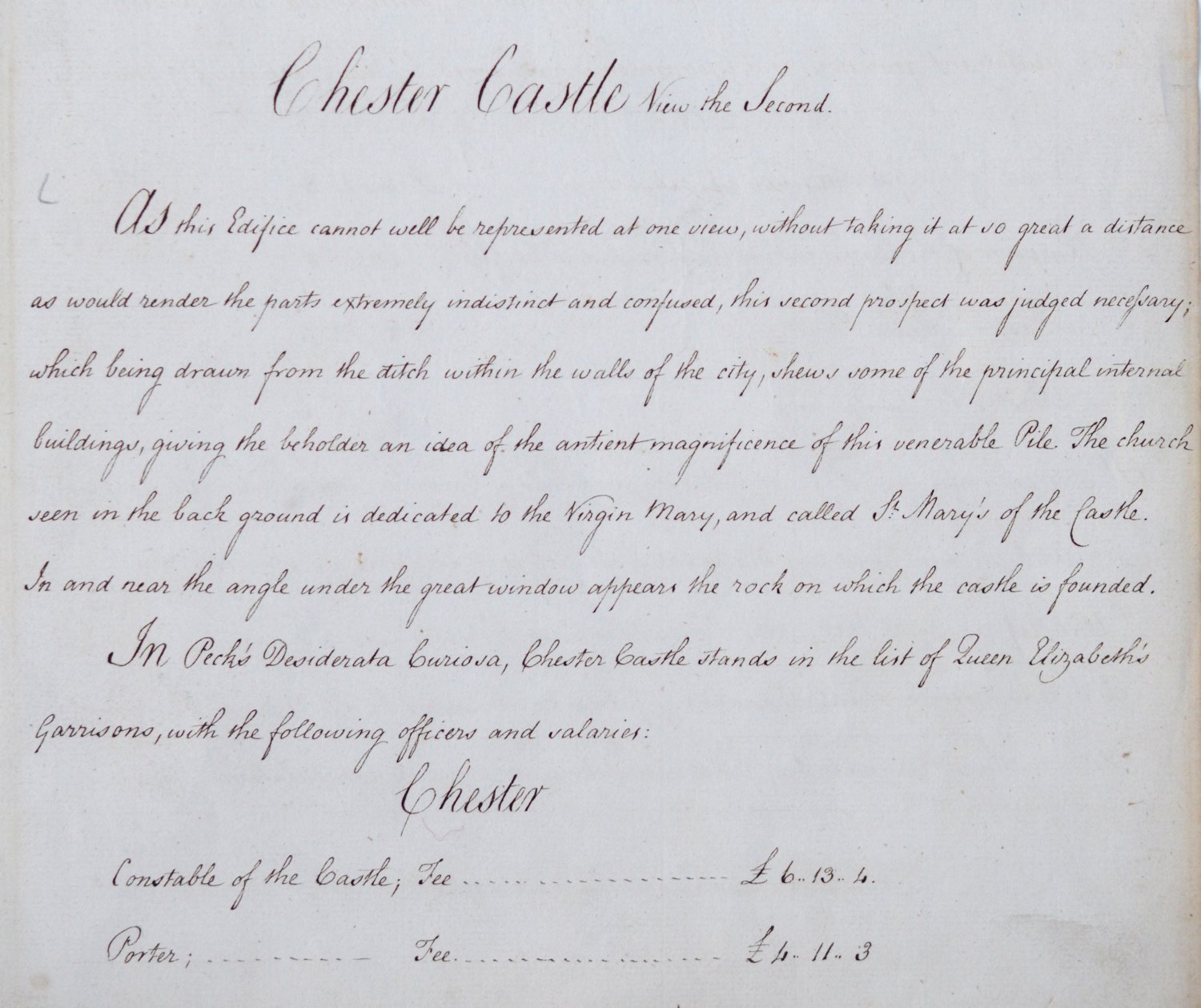
As this Edifice cannot well be represented at one view, without taking it at so great a distance as would render the parts extremely indistinct: and confused, this second prospect was judged necessary ; which being drawn from the ditch within the walls of the city, shews some of the principal internal buildings, giving the beholder an idea of the antient magnificence of this venerable Pile. The church seen in the background is dedicated to the Virgin Mary and called St. Mary’s of the Castle. In and near the angle under the great window appears the rock on which the castle is founded.
In Peck’s Desiderata Curiosa, Chester Castle stands in the lift of Queen Elizabeth’s Garrisons, with the following officers and salaries :
CHESTER.
Constable of the Castle ; Fee – £ 6 .. 13 .. 4.
Porter ; Fee – £ 4 .. 11 .. 3.
TEXT (Verso) :
CHESTER CASTLE
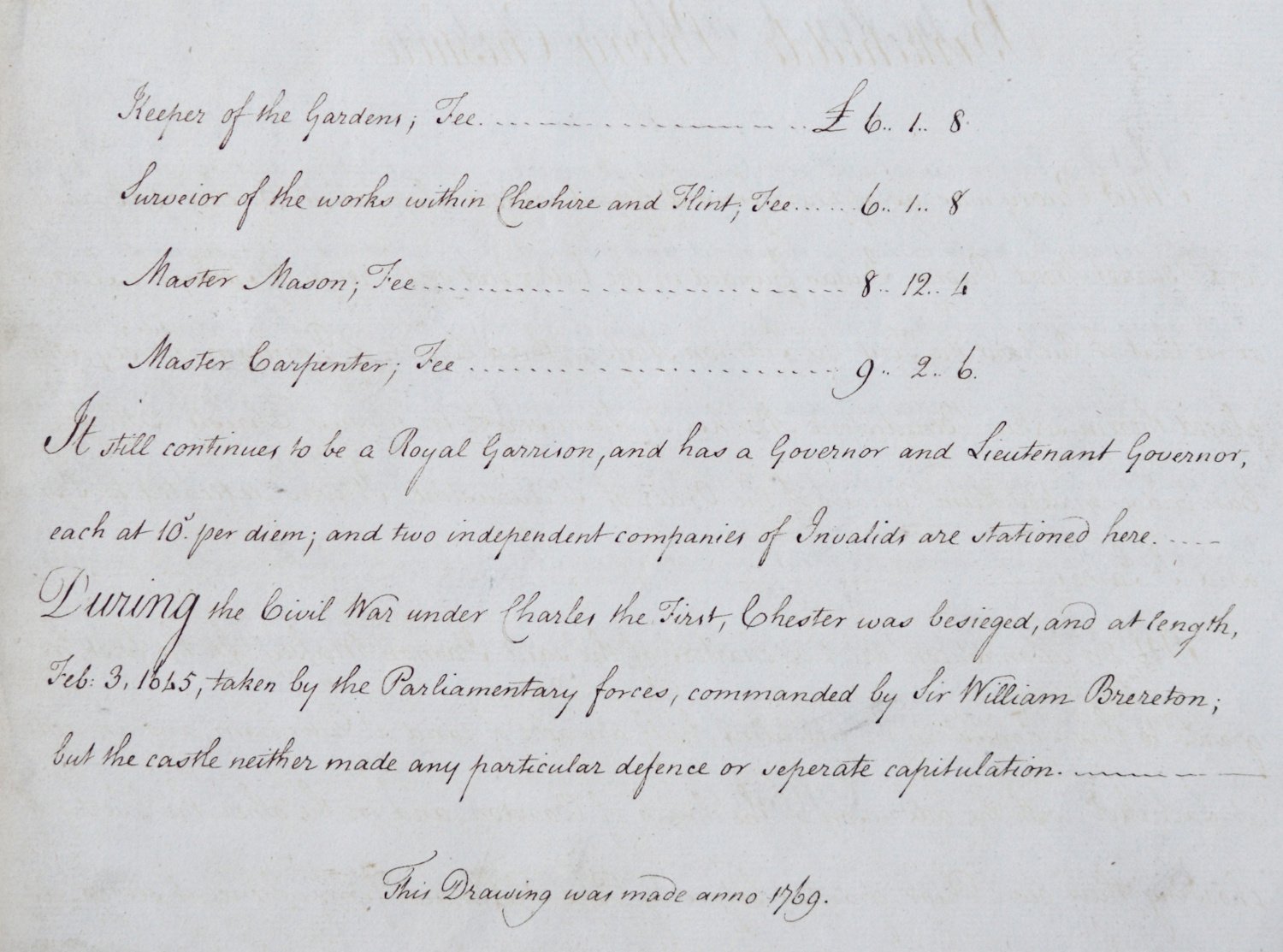
Keeper of the Gardens ; Fee – £ 6 .. 1 .. 8.
Surveyor of the works within Cheshire and Flint ; Fee – £ 6 .. 1 .. 8.
Master Mason ; Fee – £ 8 .. 12 .. 4.
Master Carpenter ; Fee – £ 9 .. 2 .. 6.
It still continues to be a Royal Garrison, and has a Governor and Lieutenant Governor, each at 10s. per diem ; and two independent companies of Invalids are stationed here.
During the Civil War under Charles the First, Chester was besieged, and at length, Feb. 3, 1645, taken by the Parliamentary forces, commanded by Sir William Brereton ; but the Castle neither made any particular defence or separate capitulation.
This Drawing was made anno 1769.